
Cygnet Texkimp has secured two contracts to supply its high-volume 3D weaving creel technology into the aerospace market.
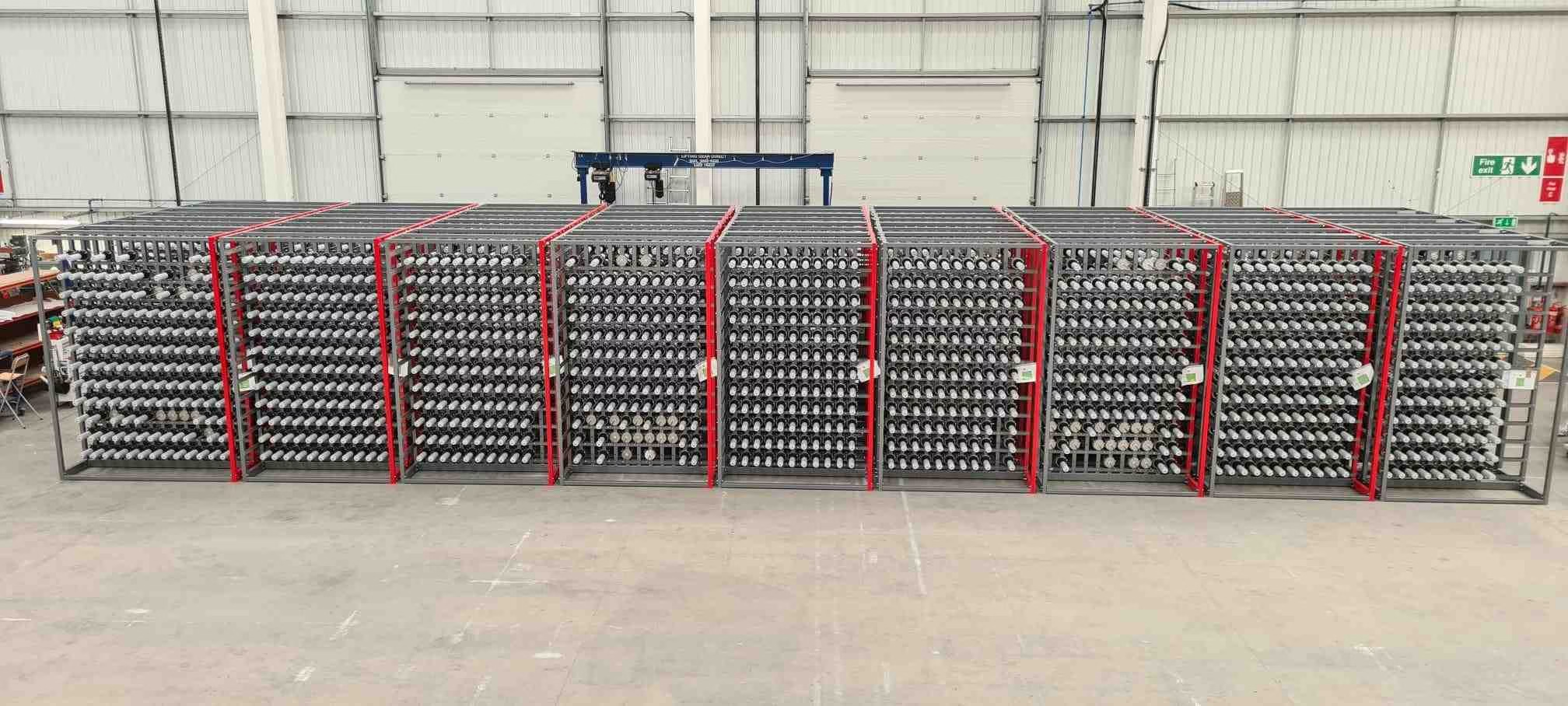
The large-scale creels will be used to unwind carbon fibres into 3D weaving looms producing lightweight, high performance engine components for next generation aircraft. Each creel will be built to incorporate between 5,000 and 7,000 bobbins of carbon fibre.
The new contracts are the latest to result from a decade-long programme of collaborative work between Cygnet Texkimp, aerospace manufacturers and independent research organisations to develop and test specialist creel technologies that support innovation in 3D weaving.
3D weaving offers manufacturers a way of creating strong, lightweight and structural carbon fibre reinforced composite parts by weaving thousands of individual fibre tows into complex three-dimensional forms. Manufacturers of a new generation of high-performance aircraft components are using 3D weaving to build parts with considerable structural integrity by applying very high volumes of fibres in accurate formation. The process is being adopted as part of strategies to improve sustainability and achieve decarbonisation by developing lighter and more efficient components including aircraft engines, fan cases and blades, wings, tubes and connectors.
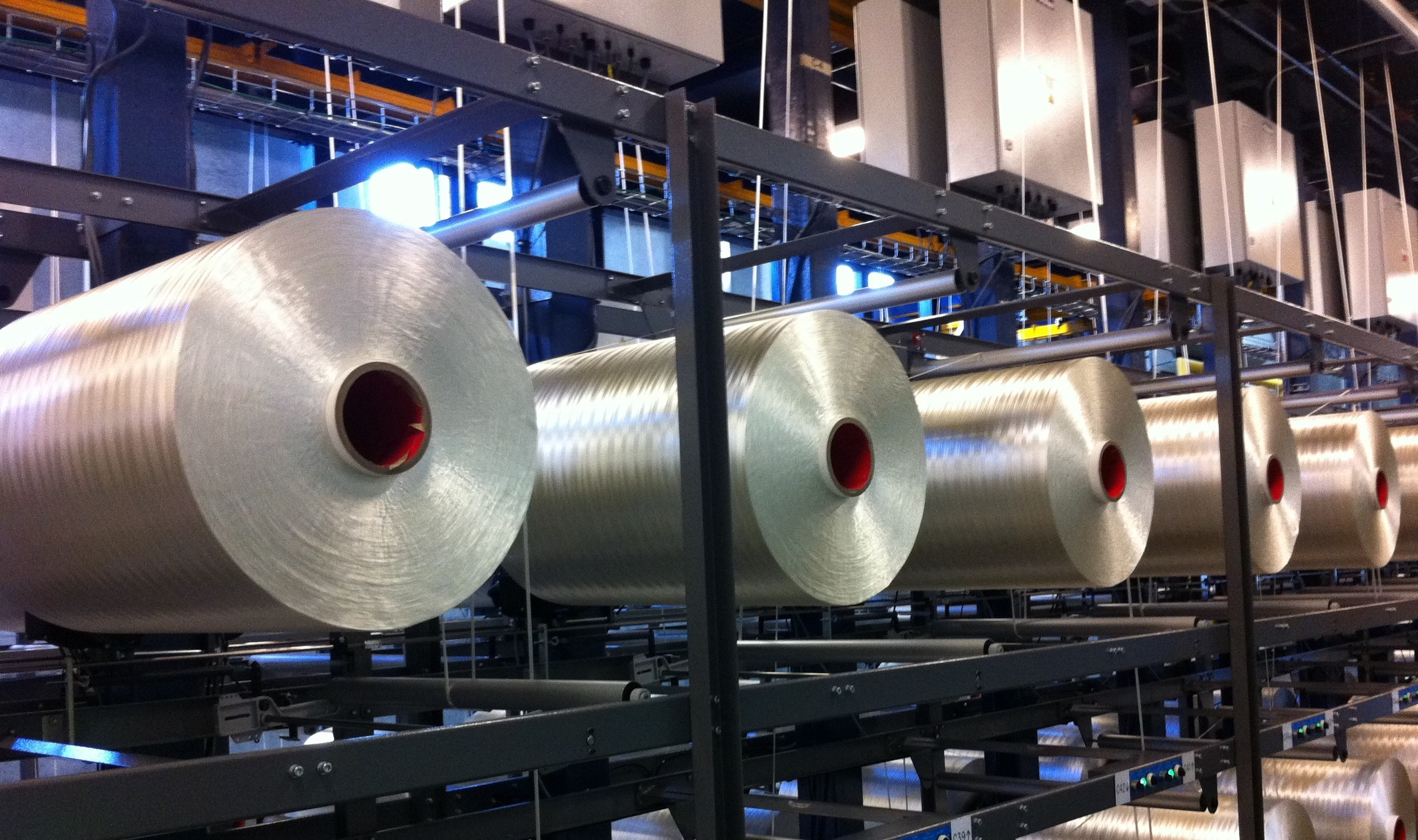
Cygnet Texkimp’s 3D Weaving Creels unwind and feed fibres into a 3D loom in a way that is consistent, accurate and repeatable. The creel is designed to accommodate thousands of fibre bobbins and ensure the integrity of every fibre tow as they travel in close proximity through the process, using a bespoke guide system to accommodate varied fibre counts (k-counts) and tow widths. An intelligent control system is used to maintain low and consistent running tension of the fibre into the downstream weaving process and enables operators to adjust the tension of individual positions or zones according to fibre weight and position in the woven structure.
Peter Stevenson, Cygnet Texkimp Product Director for Creels, said:
“3D weaving has enormous potential as a manufacturing methodology for the next generation of more sustainable aircraft, and we’re delighted to support manufacturers innovating in this exciting area.
“Our creel capability has been tested over several decades and this gives our aerospace partners confidence that our equipment performs to the highest tolerances for accuracy and repeatability, ease of operation and fibre handling, all of which are crucial in this demanding industry.”