Recycling Solutions
Pioneering Sustainable Composite Recycling
In the world of composites, Cygnet Texkimp stands at the forefront of sustainable innovation, leading the transition toward a circular economy for advanced materials. Our Recycling Solutions enable manufacturers to reclaim and reuse valuable fibres from end-of-life composites, reducing waste, conserving resources, and minimising reliance on virgin materials.
As demand for composite materials accelerates across aerospace, automotive, marine, construction, and energy, so too does the need for clean, efficient, and scalable recycling technologies. Cygnet Texkimp’s expertise in composite handling, automation, and process engineering positions us as a trusted partner for sustainability-driven manufacturing. We don’t just recycle composites — we restore their value, integrity, and performance.
Embrace Sustainability with DEECOM®
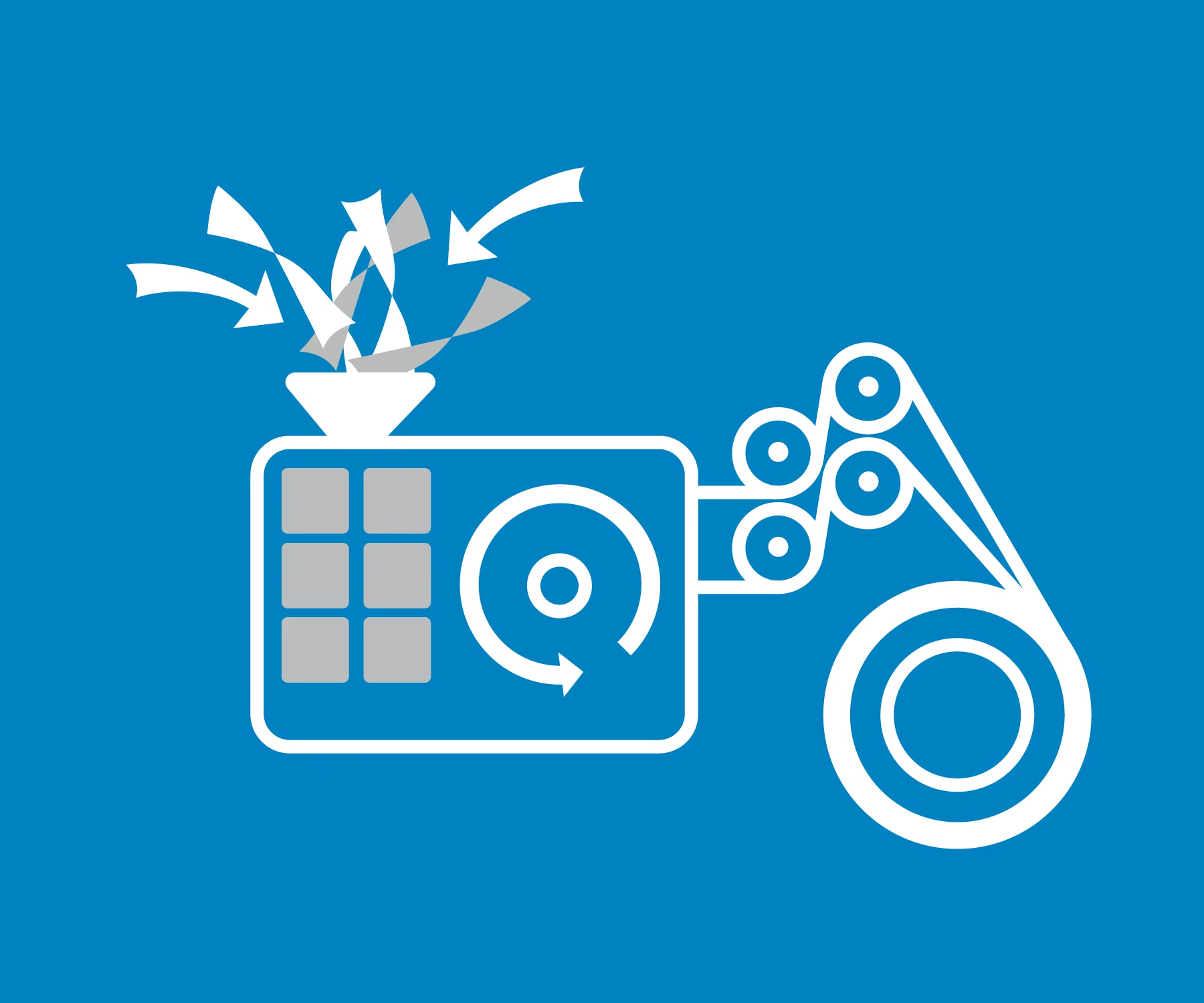
At the heart of our recycling innovation lies DEECOM® , a revolutionary pressolysis technology developed over a decade of research by B&M Longworth and now offered through Cygnet Texkimp. Unlike conventional recycling methods such as pyrolysis (burning) or solvolysis (chemical dissolution), which degrade fibre quality, DEECOM® uses superheated steam and pressure cycles to separate resin from fibre without damage or chemical residue.
This process preserves fibre integrity and strength, producing near-virgin quality materials suitable for reprocessing into high-grade composites. The result: woven fabrics, chopped fibres, or continuous filaments are returned in their original format — simply free of resin and ready for reuse.
At the heart of our recycling innovation lies DEECOM®, a revolutionary pressolysis technology developed over a decade of research by B&M Longworth and now offered through Cygnet Texkimp.
Unlike conventional recycling methods such as pyrolysis (burning) or solvolysis (chemical dissolution), which degrade fibre quality, DEECOM® uses superheated steam and pressure cycles to separate resin from fibre without damage or chemical residue.
This process preserves fibre integrity and strength, producing near-virgin quality materials suitable for reprocessing into high-grade composites.
The result: woven fabrics, chopped fibres, or continuous filaments are returned in their original format — simply free of resin and ready for reuse.
Why Choose Cygnet Texkimp for Composite Recycling


